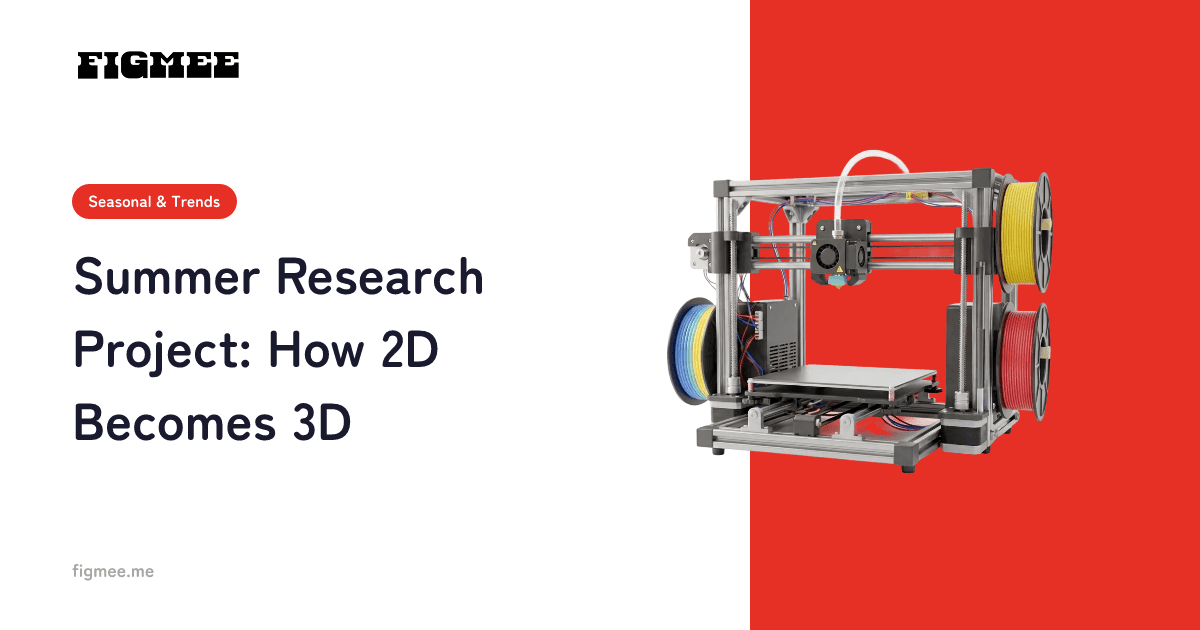
What Does "2D Becoming 3D" Actually Mean?
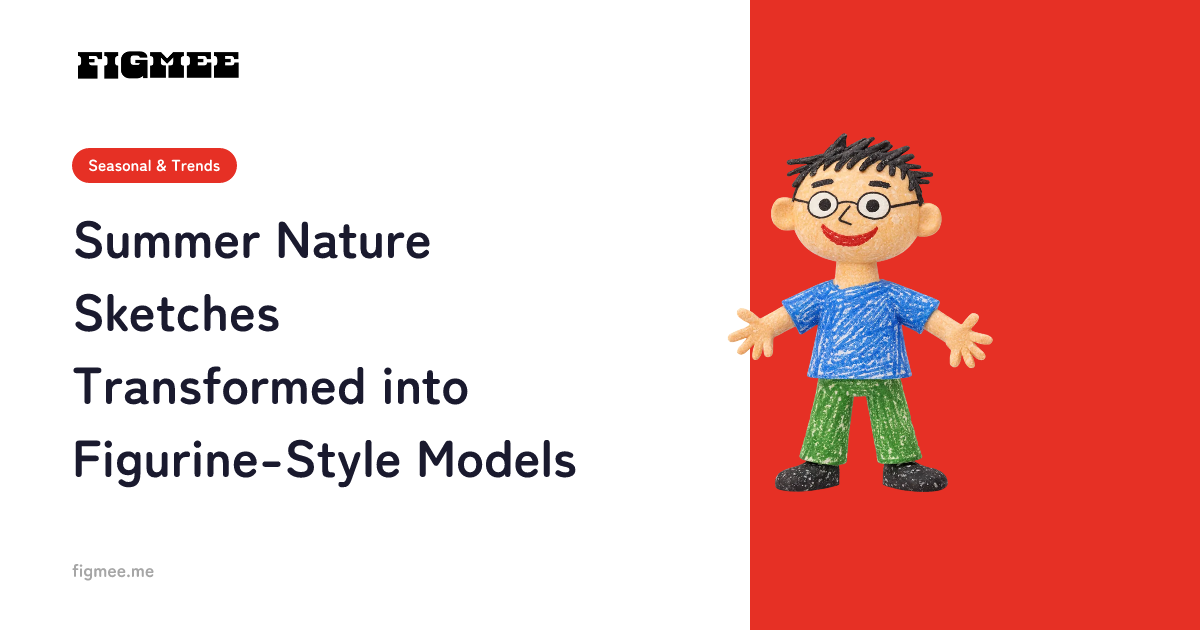
How does a flat drawing become a solid figurine? This question makes for a unique research project that bridges art and technology — perfect for any curious learner.
Why This Theme Is Perfect for Summer Research
It's True STEAM Learning
This topic naturally spans Science, Technology, Engineering, Art, and Mathematics — all the pillars of modern education.
You Can See the Results Come to Life
This isn't just desk research. With Figmee, you can run real experiments and examine results you can rotate and inspect in the 3D viewer.
Scalable for Any Age
Younger kids can explore it intuitively, while older students can dive into the technical mechanics — the topic grows with the learner.
How to Structure the Research
Step 1: Form a Hypothesis
Ask: "How does a flat drawing become a 3D object?" Then let your child guess.
Examples:
- "Maybe it inflates the outline like a balloon?"
- "Maybe AI imagines what the back looks like?"
- "Maybe it reads color intensity as depth?"
Step 2: Experiment
Use Figmee to test different conditions for 2D-to-3D conversion.
Experiment ideas:
- Draw front, side, and back views of the same character — compare results
- Test simple vs. complex drawings
- Compare single-color vs. multi-color illustrations
- Try different drawing sizes
Step 3: Observe and Record
Photograph each figurine and jot down observations.
What to look for:
- Which parts of the drawing were reproduced accurately?
- What did the undrawn side (the back) look like?
- How faithfully were colors reproduced?
Step 4: Analyze and Conclude
Revisit your hypothesis. Was it right? What surprised you? What new questions emerged?
Step 5: Present Your Findings
Organize your theme, hypothesis, experiments, results, and conclusions on a poster or slides — and your research project is complete.
Presentation Tips
- Show the finished 3D result: Watching the character take shape in 3D grabs attention like nothing else
- Show before-and-after: Place the original drawing next to its 3D model
- Use video: A 360-degree rotation clip makes the transformation crystal clear
Dive In
"From 2D to 3D" is where art meets science in the most exciting way. Use Figmee to build a summer research project that's as fun as it is educational.