What does turning an illustration into 3D mean? The short answer
Turning an illustration into 3D means taking a flat drawing or character and rebuilding it as a model you can view from every angle. As of 2026 the fastest route is to convert your illustration into a figurine-style image with AI, then generate a 3D model from it — no Blender or 3D software required, all in your browser. It's free to try, the whole thing takes about 10 to 20 minutes from generating the image to checking the 3D model, and the learning curve is almost zero.
This guide is written for beginner creators who think, "I'd love to see my own illustration or original character as something three-dimensional." We'll cover the full picture: what 3D conversion involves, the exact steps, which drawings work best, and — honestly — the cases AI still struggles with.
Note: Figmee currently offers figurine-style image generation and 3D model data (GLB / 3MF) downloads. Physical 3D print ordering is Coming Soon.
Three routes to turn an illustration into 3D
There are three broad ways to make a drawing three-dimensional. They differ in the time they take, the cost, and how faithfully they reproduce your lines and forms. Let's start with the big picture.
| Route | Learning curve | Cost | Time to finish | Line & form fidelity | Best for |
|---|---|---|---|---|---|
| 1. Model it yourself | Steep (months to learn) | Free software exists | Days to weeks | Depends on your skill | People who want to learn 3D itself |
| 2. Hire a pro | None | Quoted per project | Days to weeks | Depends on your brief | People with a budget who want it done for them |
| 3. Convert with AI | Almost none | Free tier, then low cost | Minutes | Keeps your original lines & colors | People who want a result fast, without learning |
1. Model it yourself (Blender, etc.)
You learn a 3D tool such as Blender — free, open-source software as of July 2026 — and build the model by hand. This offers the most creative freedom, since you can adjust everything exactly as you like. The trade-off is that you have to learn modeling, texturing, and lighting from scratch, and it's not unusual to spend months before your first model is finished. This route suits people who want to master 3D skills themselves. For an overview of the learning path, see our 3D modeling shortcut guide for creators.
2. Hire a professional
You commission a 3D modeler to make it for you. You don't have to touch the software, and you can leave the quality to someone experienced. However, cost is quoted per project and varies widely with the character's complexity and intended use. Turnaround is typically days to weeks, and you'll need to communicate your vision clearly in words or rough sketches. This route fits people who can set aside a budget and want the details handled for them.
3. Convert an illustration into a 3D model with AI
AI analyzes your uploaded illustration and converts it into a figurine-style image, then a 3D model. Even with no 3D knowledge at all, it becomes three-dimensional in minutes, using only in-browser steps. Recent AI has been evolving toward capturing your hand-drawn lines and a character's form "as they are," so the old problem of the result "becoming a different character" happens far less often. If you have no time to study but want your character in 3D right now, this is the fastest route in 2026. For how tools differ, see our comparison of AI tools that turn illustrations into 3D models.
As of 2026, a big reason this AI conversion suddenly became so accessible is the worldwide boom in figurine-style images. According to Google's announcements, a lineage of image-editing AI (known as "Nano Banana") arrived one after another from 2025 and was built into widely used services. More and more people now turn their own illustrations into a "figurine-style single picture" for fun. Most of that, however, stops at making an image. Taking the character you drew all the way to an actual 3D model you can rotate and check is the next stage.
How to turn an illustration into 3D with AI (Steps 1–5)
Here's the concrete flow for making a 3D model from an illustration, using Figmee as the example, in five steps. We've added rough times so you can picture the whole thing — around 10 to 20 minutes total.
Step 1: Prepare the illustration you want in 3D (about 5 min)
Choose the single piece you want to make three-dimensional. A scan of a hand drawing, a phone photo, or fully digital artwork all work. The key is that "the main subject is clear and the lines and colors are easy to read." For tips on brightness and angle when capturing with a camera, see our tips for photographing drawings for 3D.
Step 2: Upload the image to Figmee (about 1 min)
Sign up at Figmee (figmee.me) and upload your prepared image. There's no software to install — everything runs in your browser, and you can start using it as soon as you register.
Step 3: Generate a figurine-style image and refine it (about 2–5 min)
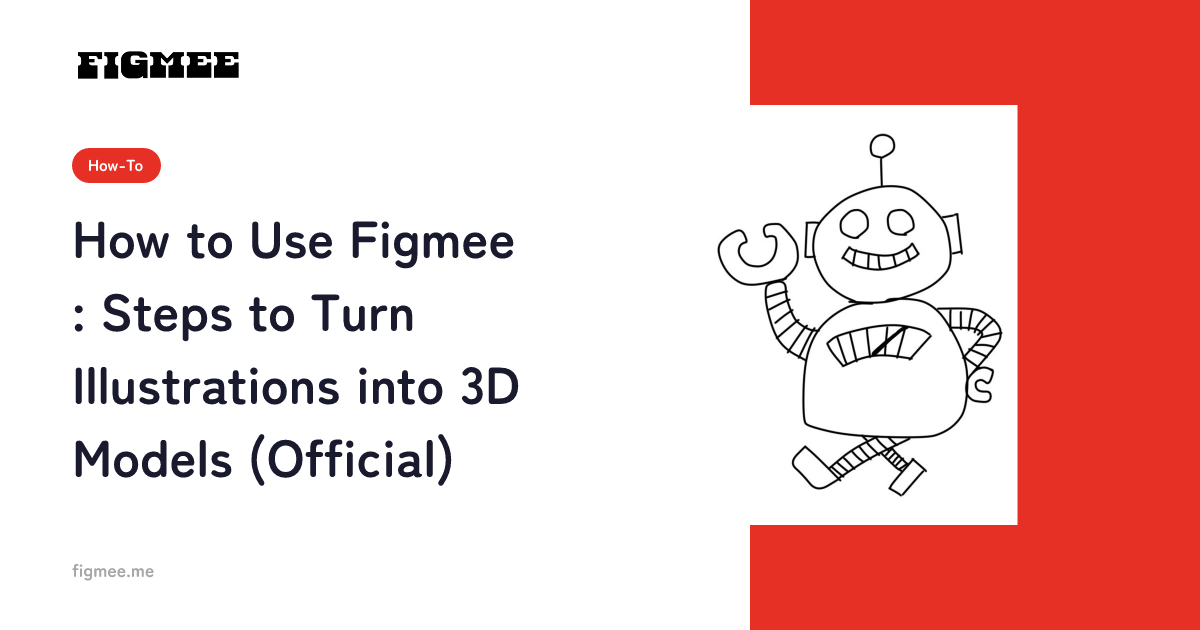
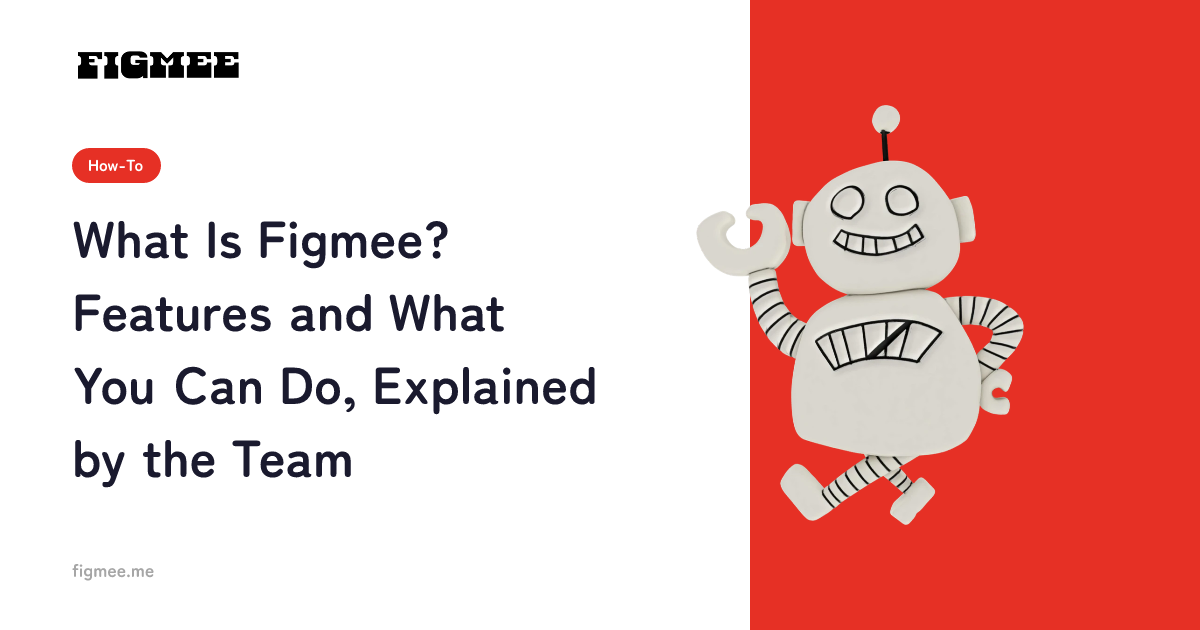
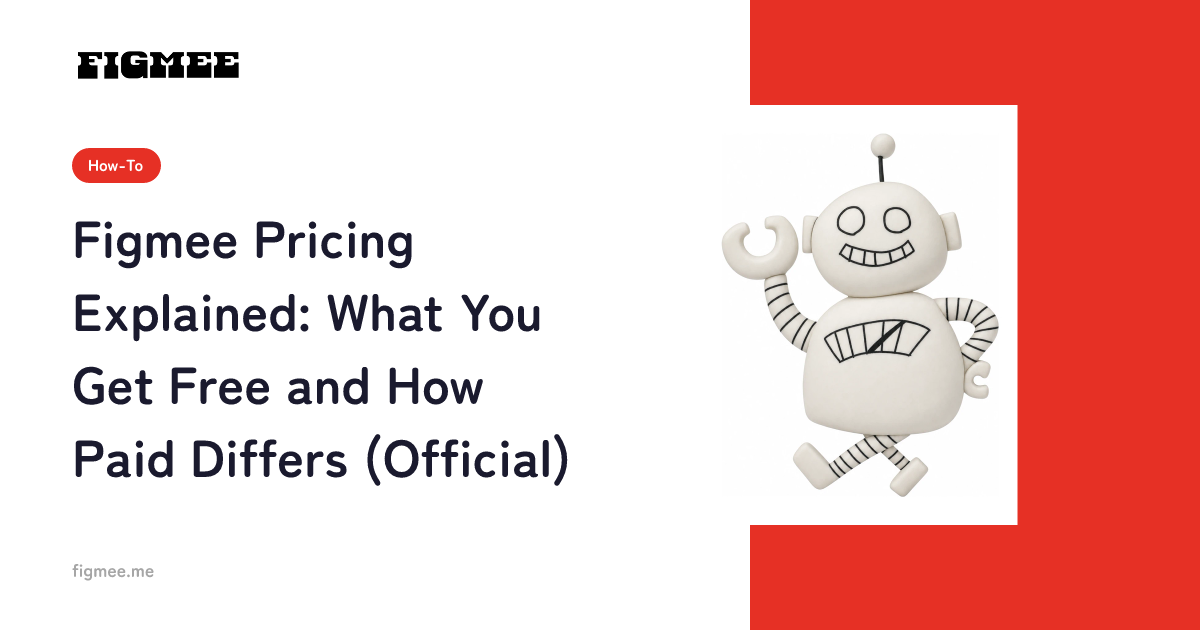
AI analyzes the illustration and converts it into a "figurine-style image" with a sense of depth. This is the foundation for the 3D model, so it matters. Review the result, regenerate if it isn't quite right, and settle on one you're happy with. Checking now that the character's features — expression, pose, colors — are reproduced well makes the next step smoother.
Step 4: Generate the 3D model (a few min)
From the figurine-style image you like, generate the 3D model. Here AI infers depth and thickness, turning a flat character into 3D data. It takes a little time, but it finishes on its own while you wait.
Step 5: Check it in 360° view and download GLB / 3MF (about 2 min)
You can spin the finished model a full 360° on screen and inspect it from every direction. Check not just the front but the profile and the back too. When it looks right, download the 3D data as GLB or 3MF. GLB is used for displaying 3D on the web and in apps; 3MF is used for 3D printing.
For reference on cost: with Figmee, figurine-style image generation is free for your first 5 times as a sign-up perk (valid for 3 months from registration), then 550 yen / 5 credits, and 3D model generation is 550 yen / 1 model (GLB and 3MF download included). Trying the free tier first, then converting your one favorite piece, is the way to go. For examples and the overall workflow, see our AI figurine creation guide. For a more hands-on walkthrough, see our guide to creating 3D figure data with AI.
Why "keeping your lines" is hard — how AI 3D conversion works
AI 3D conversion "infers" a solid shape from a single flat illustration. It is close to guessing depth from one photograph, and that brings a few inherent limits. One is the sides and back that aren't drawn in your original: for an illustration drawn only from the front, the AI fills in the back with a "this is probably it" guess, so it can diverge from your intent. Another is hair-thin lines and thin protruding parts; in the process of making them solid, they can come out thicker or get simplified.
These aren't AI "cutting corners" — they are limits that inevitably remain when you raise solid form from a flat picture. That is exactly why a conversion that copies your original lines and colors as faithfully as possible has value. Figmee is designed around carrying your drawn lines and colors straight into 3D, so your character does not turn into "someone else."
What kinds of illustrations turn into 3D well
Even with the same AI, results vary with the original illustration. Drawings that "become 3D easily" share some traits. Keeping these points in mind sharply improves fidelity.
- Facing front or slightly angled: the closer the face and body are to front-facing, the easier it is for AI to infer the overall shape.
- A clear main subject: when a single character or motif sits at the center, it's obvious what should become three-dimensional.
- Crisp lines and colors: art with well-defined outlines and readable color boundaries reproduces faithfully. For faint pencil-only art, boost the darkness before importing for stable results.
- A simple background: busy backgrounds blend into the subject, so a near-plain background is ideal.
- Enough resolution: a reasonably large, sharp image captures more detail than a tiny or blurry one.
For settings and tips when you want to fully model an original character, see our guide to turning an original character into 3D.
Cases AI struggles with (the honest limits)
AI isn't all-powerful. The following illustrations are cases current AI conversion finds hard. Knowing them in advance saves you wasted regenerations.
- Extremely thin lines and delicate parts: hair-thin lines or slim protruding decorations can come out thicker or get simplified during 3D conversion.
- Complex backs and hidden areas: any back or side not drawn in the original is "inferred" by AI, so it may come out differently from your intent.
- Many characters packed together: with several figures in one image, it's hard to judge which is the main subject and they can blend. Making 3D one character at a time is the reliable approach.
- Transparent or semi-transparent elements: glass, water, or sheer fabric are hard to interpret as solid form.
- Extreme perspective (looking up or down) and tiny text: strong perspective and small lettering inside the art tend not to reproduce accurately.
These weak spots aren't AI "cutting corners" — they're a structural limit of inferring solid form from a flat image. Start with a front-facing, single-subject, crisp-lined drawing to feel where AI 3D conversion is strong.
How to use your 3D model
Once your illustration is 3D data, the ways to enjoy it open up.
- Display and show it digitally: a model that rotates 360° carries an impact on social media and in a portfolio that a flat illustration doesn't. It's the feeling of taking your work "out of the screen."
- Draw from it: because you can turn the model to any angle and light it however you like, it doubles as an illustration reference for your own character — useful for tricky perspectives and for keeping proportions consistent across a series.
- Share on social media: a spinning model has motion, so it catches the eye and conveys the world of your original character well. Figmee also has a public gallery and social sharing features.
- Make it physical with an external 3D print service: you can take your downloaded 3MF data to an external 3D printing service and, within their limits, have it output as a physical object. When you do, always confirm the fragility of thin parts, thickness, materials, and copyright on the print service's side.
Note that physical figurine delivery by Figmee itself is Coming Soon. For now, what Figmee provides goes as far as a "figurine-style image" and "3D model data (GLB / 3MF)." For the full picture of making original figurines, see our complete guide to original figurines.
Also, if you want to make a solid or commercial product from a copyrighted character or official work, you need the rights holder's permission. For fan works, enjoy them after checking each title's guidelines. The range you can use with peace of mind is "original characters and illustrations you hold the rights to."
Frequently asked questions
Does turning an illustration into 3D cost money?
With AI tools, you can often try it for free first. With Figmee, figurine-style image generation is free for your first 5 times as a sign-up perk (valid 3 months from registration), and 3D model generation is 550 yen / 1 model. Confirming the result on the free tier before converting your favorite avoids waste.
Can any illustration be turned into 3D?
Many illustrations can, as long as the main subject is clear and the lines and colors are readable. However, AI struggles with hair-thin lines, complex backs, and images crowded with multiple characters. The more front-facing, single-subject, and crisp-lined the drawing, the more faithfully it becomes 3D.
What can I use the 3D data for?
With Figmee you can download the 3D model in GLB and 3MF formats. GLB is used for displaying 3D on the web and in apps; 3MF is used for 3D printing. Digital display and social sharing work as-is, and to make a physical object you take the data to an external 3D print service.
Can I 3D-convert copyrighted characters or fan-work illustrations?
Original illustrations you hold the rights to are fine. To make a solid or commercial product from a copyrighted official character, you need the rights holder's permission. For fan works, check each title's guidelines before using them.
Can I do it on a phone alone?
Yes. Because Figmee runs entirely in the browser, there's no software to install, and you can do everything from uploading the illustration to checking and downloading the 3D model from a phone.
How long does turning an illustration into 3D take?
With Figmee, from uploading the image to checking and downloading the 3D model, it's roughly 10 to 20 minutes in total. The steps themselves are just a few clicks; most of the time is AI generating the image and the 3D model while you wait. You can do something else in the meantime.
Do I need to know Blender or other 3D software?
No. Figmee works entirely in the browser, and you can make a 3D model without learning specialized operations like modeling or texturing. If you'd like to study 3D itself, our 3D modeling shortcut guide for creators lays out the learning path.
Can I edit the 3D model made by AI afterward?
Yes. The GLB format Figmee outputs is a versatile format that opens in many 3D applications, so you can adjust poses and fine details on the 3D software side. You can also build the base solid with AI first and then refine it from there.
Summary
Turning an illustration into 3D used to require specialist knowledge, but as of 2026 AI has changed it into a "zero-learning, minutes-in-the-browser" experience. Of the three routes — modeling it yourself, hiring out, or AI conversion — if you want it three-dimensional "fast, cheap, and with your lines intact," AI conversion is the shortest path. Keep the winning conditions in mind (front-facing, single subject, crisp lines) and the tough cases (thin lines, complex backs, many characters), and even a first-timer can get close to a model they're happy with.
Pick one illustration that matters to you and try, on the free tier, that moment when "the character you drew becomes three-dimensional, just as it is."
To learn more about Figmee itself, see What is Figmee? Features and overview.